
As roof leak insurance coverage becomes a crucial topic for homeowners, this introduction sets the stage for a comprehensive discussion that delves into the key aspects of insurance protection against roof leaks.
In the following paragraphs, we will explore the components of roof leak insurance coverage, factors that influence it, the claims process, limitations, and the significance of professional inspections.
Understanding Roof Leak Insurance Coverage
Roof leak insurance coverage is a crucial component of homeowners insurance, providing protection against the financial impact of unexpected roof damage. Understanding what this coverage typically includes and its importance can help homeowners make informed decisions.
Types of Roof Leaks Covered by Insurance
- Damage from severe weather: Insurance typically covers roof leaks caused by hail, wind, snow, or rainstorms.
- Structural issues: Insurance may cover leaks resulting from structural defects or age-related wear and tear.
- Accidental damage: Coverage may extend to leaks caused by accidents, such as falling debris or a tree branch.
Importance of Having Roof Leak Insurance Coverage
Having roof leak insurance coverage is essential for homeowners to protect their investment and ensure financial security in the event of unexpected roof damage. Without adequate coverage, the cost of repairs or replacement can be significant, putting a strain on finances.
Factors Affecting Coverage
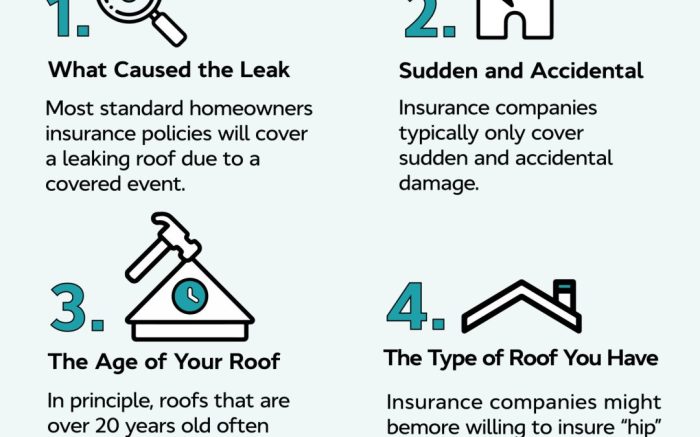
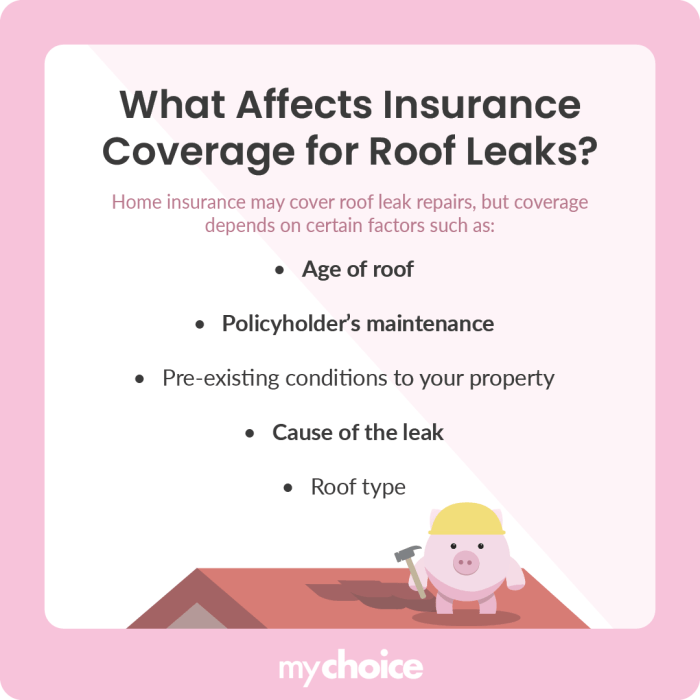
When it comes to insurance coverage for roof leaks, several factors can influence the extent of protection you receive. These factors include the age of the roof, maintenance and upkeep, as well as the cause of the leak.
Age of the Roof
The age of your roof plays a significant role in determining insurance coverage for leaks. In general, older roofs may have a higher likelihood of experiencing leaks due to wear and tear over time. Insurance companies may offer limited coverage or require higher premiums for older roofs, as the risk of leaks increases with age.
Maintenance and Upkeep
Proper maintenance and regular upkeep of your roof can impact insurance coverage for leaks. Insurance providers may inspect the condition of your roof and assess whether any neglect or lack of maintenance has contributed to the leak. Failure to maintain your roof in good condition could result in reduced coverage or even denial of your claim.
Cause of the Leak
The cause of the roof leak can also influence insurance coverage. Some policies may cover leaks caused by sudden and accidental events, such as storms or fallen trees, while excluding coverage for leaks due to gradual wear and tear. It is essential to understand the specific causes covered by your policy to ensure you have adequate protection in the event of a leak.
Claim Process for Roof Leak Insurance
When it comes to filing a roof leak insurance claim, there are specific steps you need to follow to ensure a smooth and successful process. It is essential to have the necessary documentation in place to support your claim and provide all the required information to the insurance company.
Steps in Filing a Roof Leak Insurance Claim
- Contact your insurance company as soon as you discover the roof leak to initiate the claim process.
- Document the damage by taking photos and videos of the affected areas before making any repairs.
- Get an estimate for the repairs from a reputable contractor to submit along with your claim.
- Fill out the necessary claim forms provided by your insurance company accurately and completely.
- Cooperate with the insurance adjuster during their inspection of the damage to assess the extent of the claim.
Documentation Needed for a Roof Leak Insurance Claim
- Photographs and videos of the damage before any repairs are made.
- Repair estimates from licensed contractors.
- Copies of any maintenance records or inspection reports related to the roof.
- Any communication with the insurance company regarding the claim.
- Receipts for temporary repairs made to prevent further damage.
Tips for a Successful Roof Leak Insurance Claim
- Act quickly and report the claim as soon as you notice the damage.
- Keep detailed records of all communication with the insurance company and contractors.
- Do not start permanent repairs until the insurance company has approved the claim.
- Be honest and provide accurate information to avoid any delays in the claim process.
- Consider hiring a public adjuster if you encounter any difficulties with the insurance company.
Limitations and Exclusions

When it comes to roof leak insurance coverage, it's essential to be aware of the limitations and exclusions that may apply to your policy. Understanding these factors can help homeowners better prepare for potential issues and ensure they have the appropriate coverage in place.
Common Limitations to Roof Leak Insurance Coverage
- Age of Roof: Some insurance policies may have limitations based on the age of the roof. Older roofs may not be fully covered for roof leaks.
- Preventable Damage: Damage caused by neglect or lack of maintenance may not be covered under your policy.
- Gradual Damage: Insurance typically covers sudden and accidental damage, so gradual leaks or wear and tear may not be included.
- Policy Limits: There may be limitations on the total amount of coverage available for roof leaks, so homeowners should check their policy for specific details.
Typical Exclusions Regarding Roof Leaks
- Flooding: Damage caused by flooding or external water sources may be excluded from coverage.
- Earth Movement: Issues related to earthquakes, landslides, or sinkholes are commonly excluded from insurance policies.
- Improper Installation: Damage resulting from improper installation or maintenance of the roof may not be covered.
- Wear and Tear: Normal wear and tear over time is typically not covered by insurance.
Addressing Limitations and Exclusions
- Review Policy: Homeowners should carefully review their insurance policy to understand what is and is not covered regarding roof leaks.
- Add Endorsements: Depending on the limitations, homeowners may be able to add endorsements or additional coverage to their policy for specific needs.
- Maintain Roof: Regular maintenance and inspections can help prevent issues and ensure your roof is in good condition, potentially reducing the risk of denied claims.
Importance of Professional Inspections
Professional roof inspections are crucial for insurance coverage as they help in assessing the current condition of the roof, identifying potential issues, and documenting any existing damage. Insurance companies often require a professional inspection report to validate claims related to roof leaks.
Without a professional inspection, it can be challenging to prove the cause and extent of the damage, leading to potential claim denial or reduced coverage.
Regular Inspections for Preventing Roof Leaks
Regular inspections by a professional roofing inspector can help prevent roof leaks by identifying minor issues before they escalate into major problems. By addressing these issues early on, homeowners can avoid costly repairs or replacements due to water damage caused by leaks.
Additionally, routine inspections can help maintain the roof's structural integrity and prolong its lifespan.
- Inspect the roof at least once a year, preferably in the spring or fall, to check for any signs of damage or wear and tear.
- Keep gutters clean and free of debris to prevent water buildup and potential leaks.
- Trim overhanging tree branches to prevent damage to the roof and minimize the risk of falling debris causing leaks.
Tips for Choosing a Reputable Roofing Inspector
When selecting a roofing inspector for insurance purposes, homeowners should consider the inspector's qualifications, experience, and reputation. Here are some tips for choosing a reputable roofing inspector:
- Verify that the inspector is licensed, certified, and insured to perform roof inspections.
- Check the inspector's references and reviews from previous clients to ensure they provide thorough and reliable inspection reports.
- Ask about the inspector's experience with insurance claims and their familiarity with the insurance company's requirements.
- Request a sample inspection report to understand the level of detail and professionalism the inspector provides.
Final Summary

Wrapping up our discussion on roof leak insurance coverage, it's evident that safeguarding your home against potential leaks is a vital aspect of protecting your investment. By understanding the nuances of insurance coverage and taking proactive steps, you can ensure peace of mind and financial security amid unexpected roof issues.
FAQ Explained
What types of roof leaks are typically covered by insurance?
Insurance usually covers roof leaks caused by storms, fallen trees, or sudden accidents. Gradual wear and tear may not be covered.
How does the age of the roof affect insurance coverage for leaks?
Newer roofs may have better coverage, while older roofs might face limitations or higher premiums.
What should homeowners do to address limitations in their coverage?
Reviewing and updating your policy regularly can help address limitations. You can also consider additional coverage options.